

All Is Not What It Seems: Why Engaging A Project Manager for Your Granny Flat Is A Smart Move
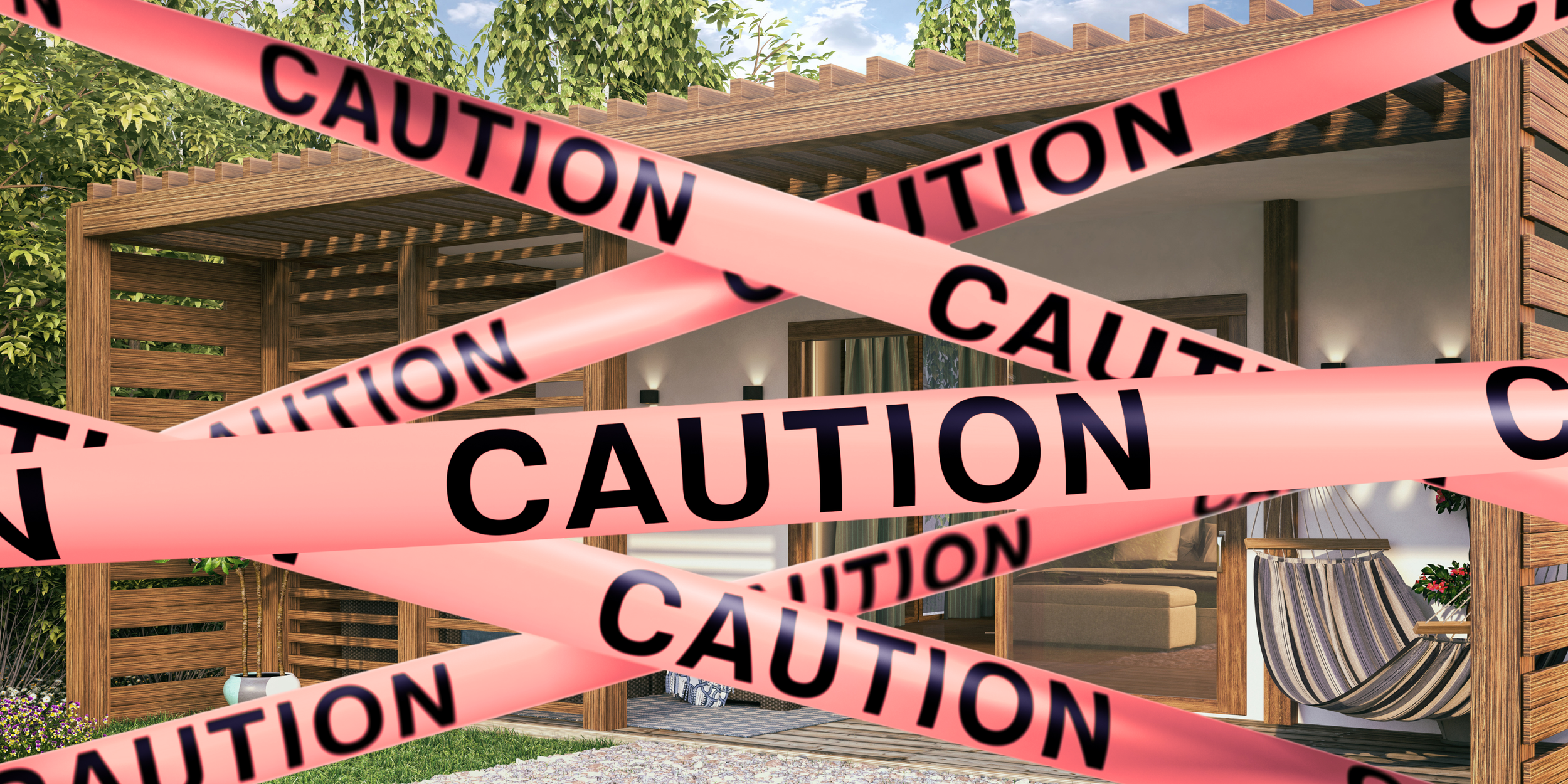
Building a granny flat or sleepout can look deceptively simple. It’s smaller than a house, and slightly bigger than a good shed… (is that an age thing? Like saving a good box, we’re now in the age group of shed appreciation, anyway I digress). Often marketed as “straightforward”… and recent regulatory changes may give the impression that the process is now easier. But don’t get carried away and rush into it - because beneath that surface lies a web of responsibilities, risks, and decisions that can quickly overwhelm even the most organised homeowner.
From early 2026, homeowners will be able to build a simple standalone granny flat of up to 70m² without a building consent, following new legislation.
Resource consent requirements were removed at the end of 2025. The aim of this change in legislation is to boost housing supply, reduce costs, and improve productivity in the construction sector.
However, a granny flat project is still a construction project and there’s a sh*t ton of complexity that comes with it.
To qualify, the dwelling must be simple in design, meet the Building Code, and be built by authorised professionals. Owners must notify their local council before starting and after completion, with clear documentation and records of work required.
Still thinking about it? Okay, cool, let’s talk about it!
The Illusion of Simplicity
Granny flats are compact, and so many owners assume they’re low-risk. Yet these builds still trigger critical considerations:
Site constraints and boundaries
Services and infrastructure connections
Natural hazard exposure
Resource consent considerations
Covenants and easements
Building Code compliance
Licensed Building Practitioner (LBP) obligations
Documentation and certification
Even where building consent exemptions apply, compliance obligations do not disappear. The responsibility simply shifts - and it lands squarely on the owner.
Dan says:
“Generally, when planning rules appear to be relaxed or a build becomes a permitted activity under the RMA, it doesn’t mean ‘no rules’, it means strict parameters must be met. In reality, proving compliance with those parameters can be more complex than lodging a consent with minor effects. Even something as simple as adding a deck can change the compliance picture. While decks may not count toward the 70㎡ floor area cap, in some instances they can trigger separate building consent requirements or cause a breach of site coverage and setback rules.”
Oh Ye Cannae Shove A Granny in Any Old Flat - Where Things Commonly Go Wrong
Without experienced oversight, projects frequently encounter more slip ups than a pensioner on ice:
Scope creep
What starts as a modest standalone evolves into added bathrooms, decks, or design changes - blowing out budgets, creating compliance complexity.
Budget surprises
Hidden costs emerge: ground conditions, drainage upgrades, power supply changes, development contributions.
Contractor coordination issues
Delays arise when trades aren’t sequenced correctly or materials aren’t available when needed.
Compliance gaps
Missing producer statements, incomplete records, or improper sign-offs can create headaches at sale time.
Time overruns
A “three-month build” quietly stretches into six or nine months.
Each of these problems is avoidable - but only with the right planning and control.
What a Project Manager Actually Does
A project manager (PM) is another layer of cost of the build - BUT they’re a layer of protection that will save you big bucks long term, stopping you from ending up in the doghouse – or let’s be fair, accidentally building one.
Engaging with a BPM Project Manager ensure that you don’t get any nasty surprises or end up out of pocket.
What that looks like:
Define the project properly
Clarify scope, expectations, quality standards, and risks before work begins.
Establish a realistic budget
Identify full project costs, contingencies, and potential financial traps.
Navigate approvals and documentation
Ensure PIM findings, Code requirements, and LBP obligations are understood and addressed.
Coordinate consultants and contractors
Architects, engineers, surveyors, builders all aligned and working to the same plan.
Manage programme and sequencing
Avoid downtime, clashes, and inefficiencies.
Monitor quality and compliance
Catch issues early, before they become expensive problems.
Act as your advocate
Protect your interests when variations, disputes, or unexpected conditions arise.
Many owners hesitate at the idea of paying for project management. Especially when the builder says they will do it, or the designer… but both have vested interest when it comes to extras or design failures. So who is batting for the owner?
Therefore, ironically, the absence of a PM often costs more.
A single mistake - such as a non-compliant boundary setback, inadequate drainage design, or missing certification - can trigger:
Rework costs
Delays
Council complications
Insurance issues
Reduced resale value
Teamwork makes the dream work isn’t just a catchy slogan. We mean it. Project managers exist to prevent these scenarios.
Dan notes:
“Someone is always managing the project, but are they always managing it in the best interests of the owner? Unfortunately, this happens all too often and we’ve been involved in several cases where an independent owners agent hasn’t been involved until somethings gone wrong and there is a dispute, builder blames designer, designer blames builder, both expect owner to pay.”
Risk Reduction = Cost Reduction and Peace of Mind Has Value
Beyond financial outcomes, there’s the stress factor. Construction projects demand constant decisions, coordination, and problem-solving. For most homeowners, this sits outside their expertise and daily capacity. Are you really in a place to juggle whanau, work, and whatever life is throwing at you PLUS adding amateur PM to your grind?
We absorb that pressure. You don’t pay the mechanic to turn the screw you pay them to know which screw to turn.
Instead of managing trades, chasing documents, or worrying about what you might have missed, you can focus on the bigger picture - knowing someone is steering the project professionally.
Granny Flats Are Investments - Treat Them Like One
Whether your goal is accommodating family, generating rental income, or increasing property value, a granny flat is a strategic asset. Poorly planned or executed builds can undermine that investment.
Well-managed projects, on the other hand, deliver:
Better cost control
Faster delivery
Higher build quality
Stronger compliance records
Greater long-term value
A granny flat may be smaller, but the risks aren’t. Regulations, technical requirements, and financial exposure remain very real – and - engaging a project manager doesn’t complicate your project, it simplifies it, because when it comes to building on your property, all is not what it seems.
Your next steps:

Checklist: Should I Engage A Project Manager For My Granny Flat Or Sleepout
Check to see if you’re good to go, or if you’ll need to engage a project manager for your granny flat or sleepout.
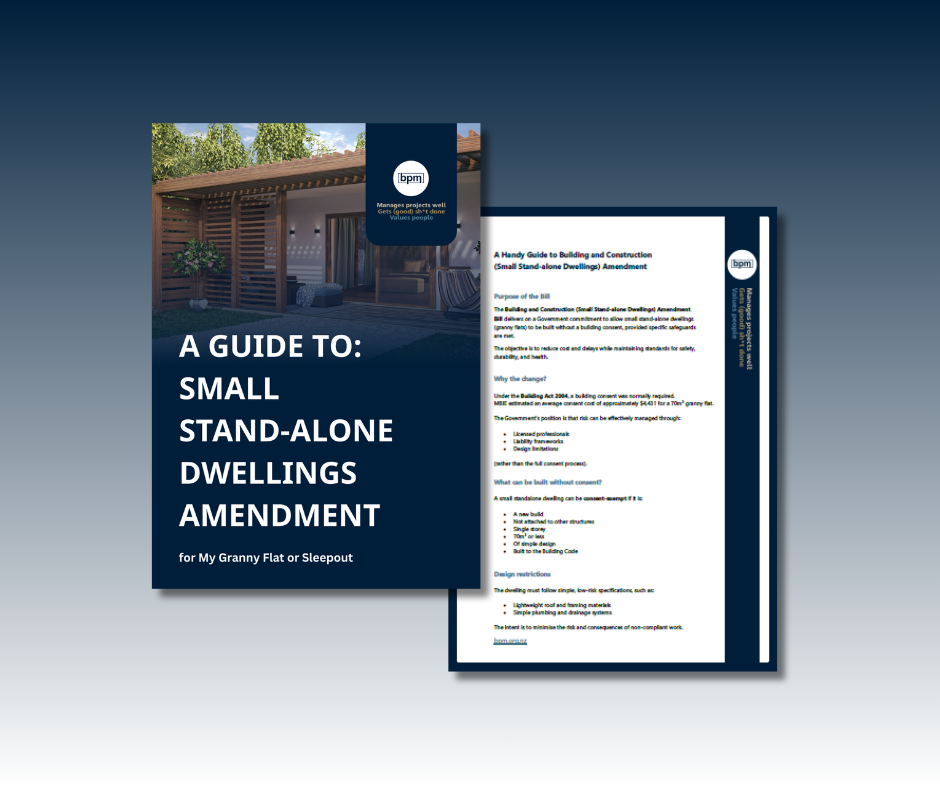
A Handy Guide To: Building And Construction - Small Stand-Alone Dwellings Amendment
Planning on building a granny flat or sleepout? This free guide can help you navigate the read tape and understand the Small Stand-Alone Dwellings Amendment.
Every Successful Project Starts With Good Advice
Talk to BPM Ltd about planning, risk, contracts, and delivery strategy.
No obligation. Early-stage conversations welcome.