Tasman District Council | Port Tarakohe Management & Amenities Building




Client: Tasman District Council
Project Type: Commercial, Cost Management, Community, Design & Build, Engineer To Contract
Project Manager: Dan Roberts
Location: Port Tarakohe, Golden Bay
BPM Ltd delivered the Port Tarakohe Management & Amenities Building for Tasman District Council on time and under budget — a two-storey, 140m² harbourmaster and amenities facility that has since become a landmark of Golden Bay.
Developed as part of the wider $12 million Port Tarakohe upgrade, the build provides modern offices, meeting rooms, and shared amenities for port staff and commercial users, while authentically embedding over 700 years of Māori cultural heritage into its design. The result is a facility praised by port users, iwi, and council staff alike — functional, future-focused, and deeply connected to the place it serves.
We’re proud to share that alongside Coman Construction & Property Solutions, our Port Tarakohe Management & Amenities Building project has been named a finalist in the RCP Commercial Office Property Award at the Property Council New Zealand Rider Levett Bucknall Property Industry Awards 2026. 🍾
-
Tasman District Council required new facilities to support staff and port users as part of the wider Port Tarakohe upgrade. While the larger development focused on a new wharf and additional berths, this stage of the project was about creating a building that could:
Provide offices, meeting space, and amenities for TDC port staff.
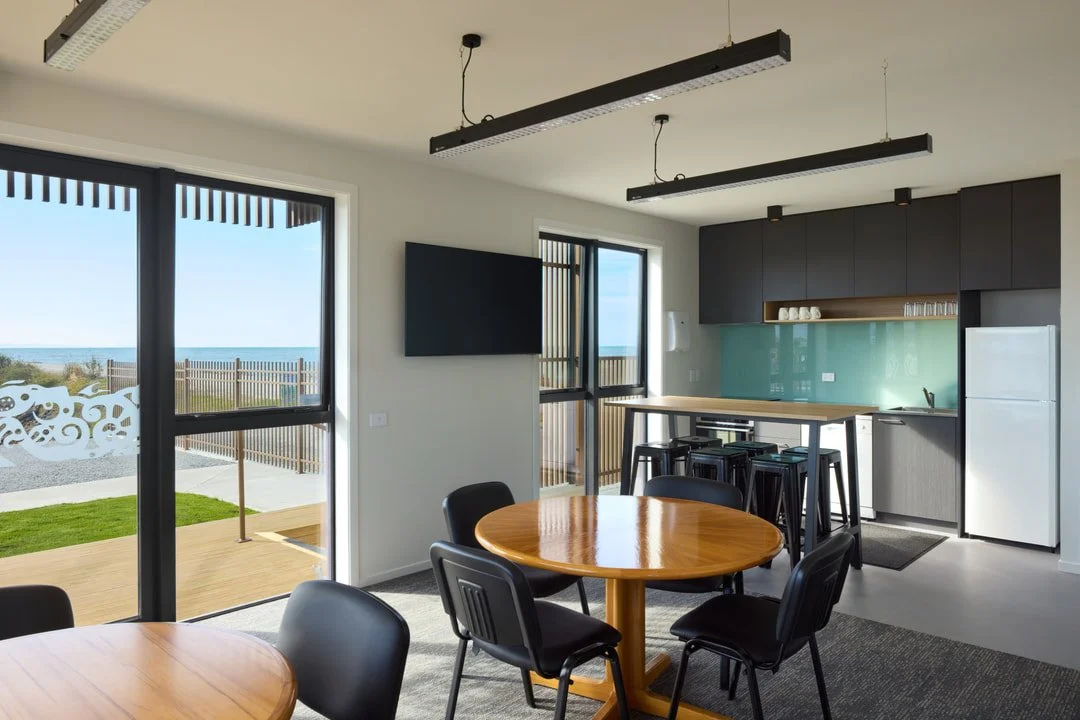
Offer shared facilities for both commercial and recreational users, including a lounge, kitchenette, laundry, and amenities.
Incorporate sustainable and durable materials suited to the marine environment.
Respect and reflect the cultural and historical significance of the site to local iwi and the community. Port Tarakohe holds deep historical significance, having served as the operational base for the Golden Bay Cement Company between 1908 and 1988. With the construction of a wharf and the start of cement production, it became a key driver of the local economy. The site also carries strong cultural importance for Māori, who have cultivated the land for generations, and it is notable as the location of the first recorded encounter between Māori and Abel Tasman in 1642. Today, the port continues its legacy as a vital marine hub, supporting fishing, rock barging, and aquaculture industries.
A key technical challenge was the lack of a reticulated wastewater network. This required a dedicated on-site holding tank and a long pipeline connection to the nearest Council pump station, several hundred metres away. The site was located on reclaimed land, in close proximity to the ocean. This posed a significant geotechnical challenge due to the nature of the fill material, which was classified as uncontrolled fill - a heterogeneous mix of various materials. To address this, a gravel raft foundation was adopted. This type of foundation helps to mitigate differential settlement by distributing loads more evenly across the variable ground conditions.
Another critical concern was lateral spread in the event of a major seismic event, given the loose and potentially liquefiable nature of the fill. To mitigate this risk, the building was required to be set back a minimum of 15 meters from the ocean on all sides. While this introduced some space planning challenges, we ultimately succeeded in positioning the building optimally to support efficient port operations.
-
The project was delivered under a design-build contract, with BPM acting as the Engineer to Contract.
Close collaboration with mana whenua was central to the process. Given the historical and cultural significance of the site to local iwi, maintaining open and respectful communication with local mana whenua was a critical element throughout all phases of the project.
The building was co-designed by architect JTB in collaboration with local artist Robin Slow, working closely with Manawhenua ki Mohua.
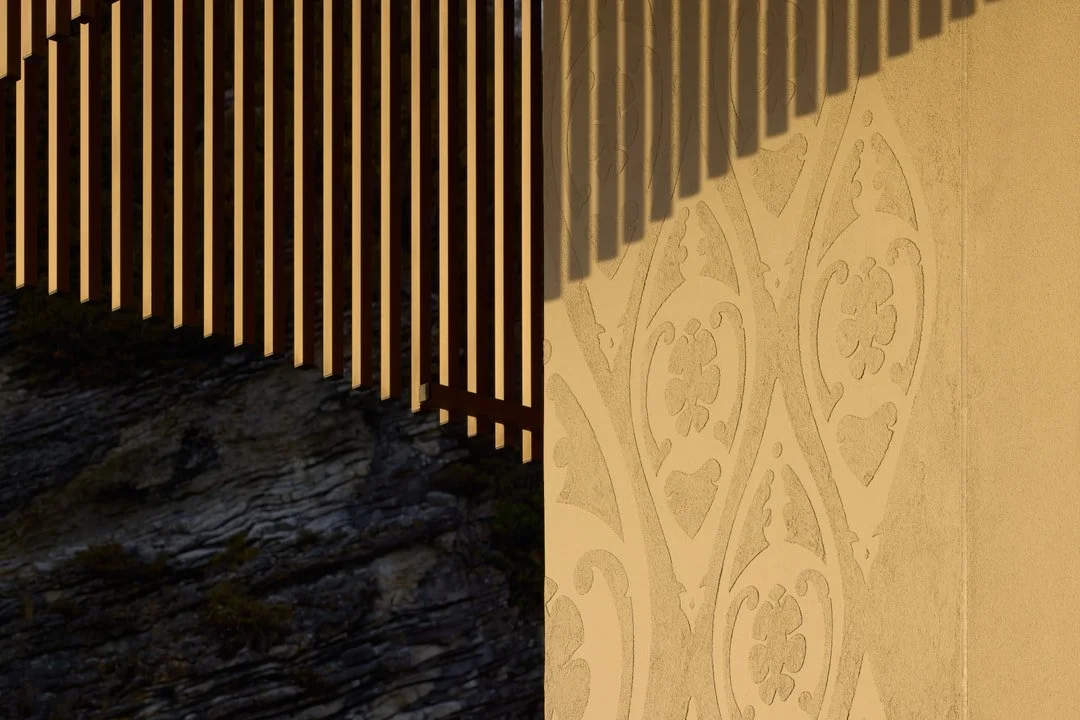
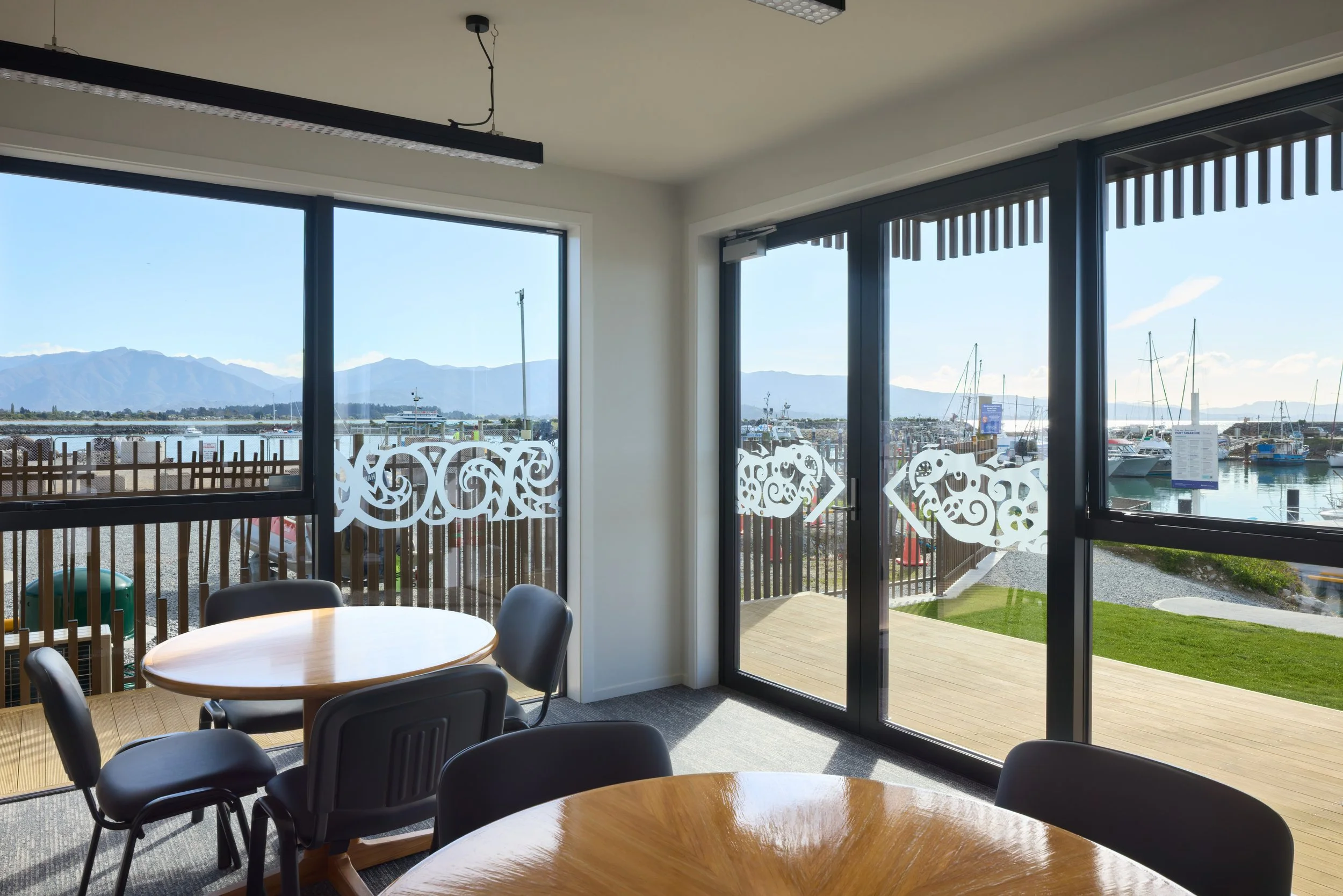
This partnership ensured that cultural narratives were authentically embedded within the design. Several design elements reflect local stories and identity, such as patterns inspired by the honu (turtle) motif from the Anaweka waka, discovered on the Kahurangi coast in 2012.
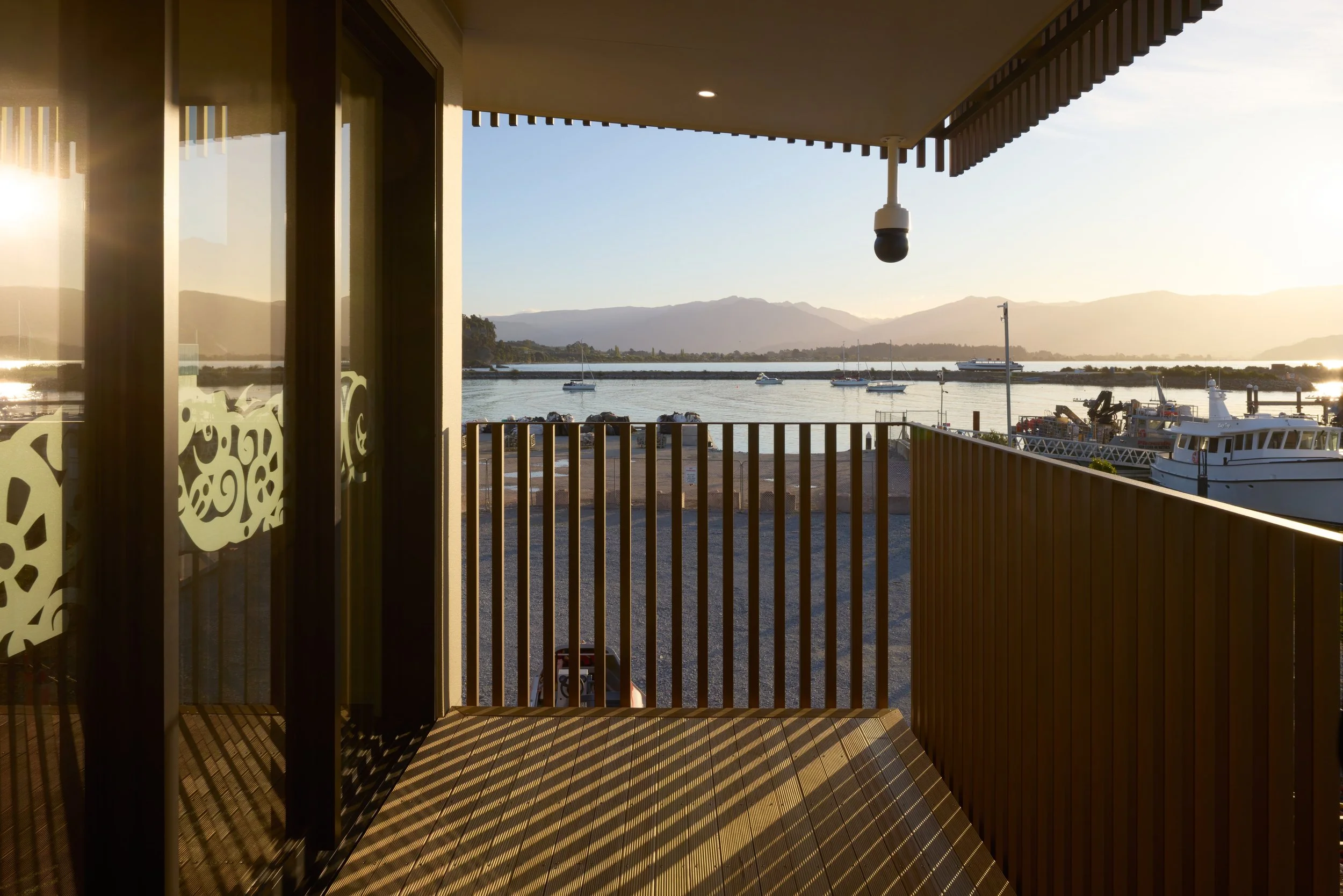
Elevated screens symbolise palisades, bringing connection with traditional Māori Pā sites for both protection and symbolism. The vertical batons are inspired by organic forms from whenua and moana, creating a striking harmonious connection to nature.
Design features include:
Cultural storytelling through honu (turtle) motifs from the Anaweka waka.
Palisade-inspired screens referencing historic Māori pā defensive structures.
Environmental integration, with plastered cladding that blends into the limestone cliffs.
Sustainability was central, including a 20KW solar system and the use of marine-resistant materials.
-
The result is a facility that is both functionally effective and a legacy build that emanates depth and quality - culturally meaningful and rich in storytelling, providing modern amenities for staff and port users while honouring the site’s heritage – delivered on time and on budget.
We’ve had positive feedback from port users, Tasman District Council (TDC) staff, and local iwi, highlighting the project’s success. Stakeholders have praised the building’s design, the stories it reflects, and the enhanced amenity it offers commercial and recreational users.
This success was largely a result of strong engagement with mana whenua, coupled with a design that resonates with the local community, as whilst it’s a highly functional facility for the port, it’s seamlessly integrated into the natural surroundings, through palette finishings and landscaping.
Only a few months after project completion, port occupancy increased from approximately 90% to full capacity, with a waiting list now in place. This growth includes six new 30-metre berths completed shortly before the commencement of our building.
The increased occupancy not only enhances revenue for the Port but also generates a substantial positive impact on both the local and national economy. This is particularly evident in the new commercial berths, which are predominantly utilised by mussel farming operators. As a result, mussel throughput at Port Tarakohe is projected to double - from 15,000 tonnes per annum to 30,000 tonnes per annum.
In addition to the strong commercial outcomes, feedback from recreational users of the new facilities has been overwhelmingly positive. The Port Manager has received multiple comments from recreational visitors undertaking national sailing trips, noting that the new facilities at Port Tarakohe are among the best anywhere in the country.

How A 700 Year Old Waka Influenced The Design Of A Golden Bay Port Office In 2025
If you’re local to the area, you might have noticed that Port Tarakohe has a nice new office. Situated facing north towards the marina, it’s modern but sleek design harmonises with the landscape. Nestled below limestone cliffs – it looks at home. And home it is to many port users on the daily.
Representing a deep connection between whenua (land) and moana (sea) – this hybrid office & amenities space has connections and influences steeped in more local history than you might think.
Project Management & Engineering Services Across New Zealand
From Golden Bay to greater New Zealand, BPM Ltd provides end-to-end project management, contract administration, and engineering services for councils, developers, and iwi. If you're planning a build that needs to deliver — technically and culturally — we'd love to hear from you.