New Zealand's Water Infrastructure Crisis: What Councils, Schools & Communities Need to Know
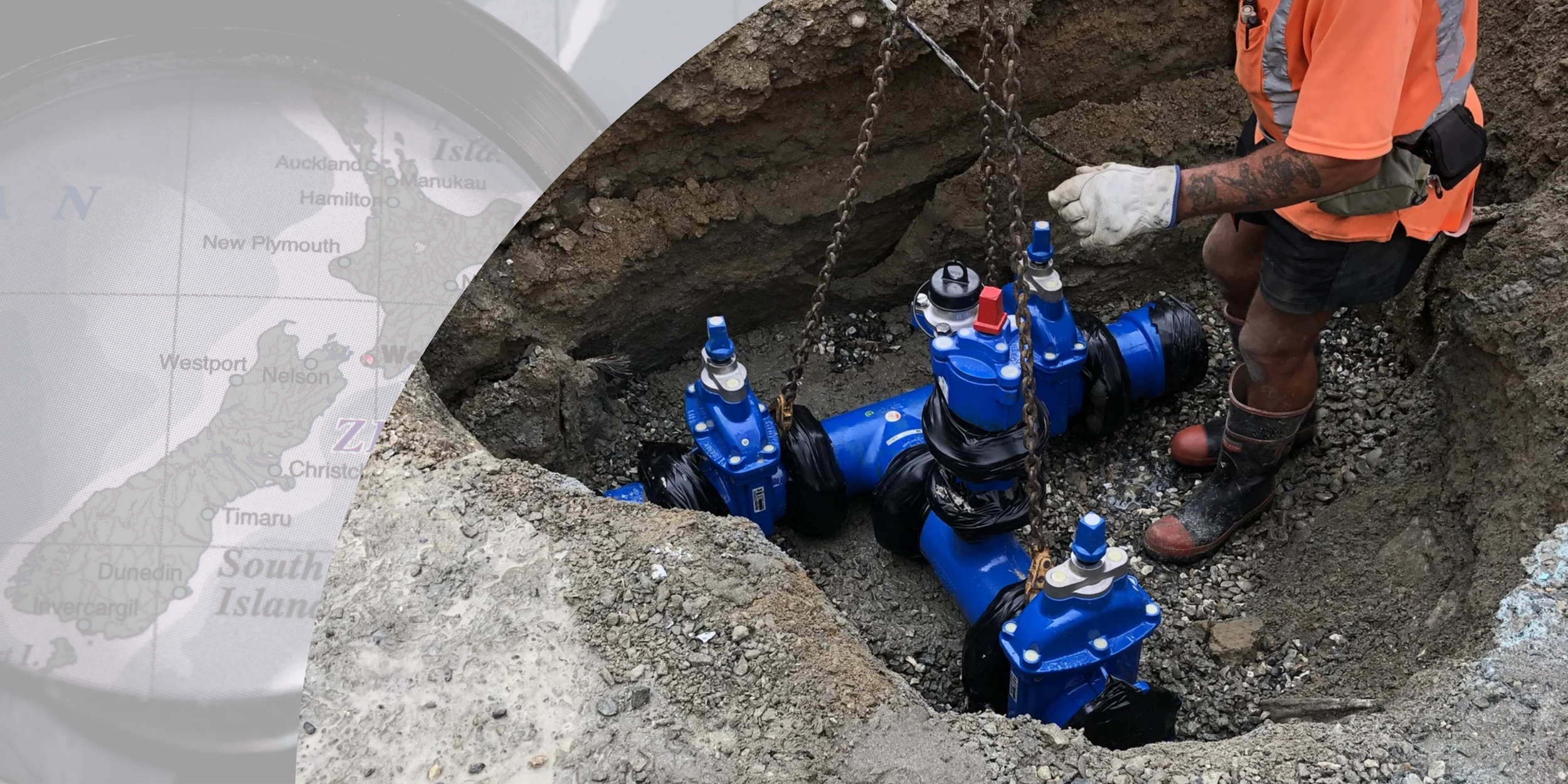
Well, water you know… *taps mic* … we’ve got a bit of a problem... As relevant as ever, we’re looking at New Zealand’s water infrastructure crisis – from wastewater treatment failures to E.coli in school drinking water to flooding in Wellington’s Basin Reserve. As we jump into the deep end of this tricky subject, you’ll some insights around the scale of the problem, the challenges, risks, we look at the evolving regulatory landscape and more.
On 4 February 2026, Wellington's Moa Point Wastewater Treatment Plant failed. Overnight, a possible design flaw in a bypass pipe could have trapped air and blocked an outflow pipe. Untreated wastewater began discharging after the long outfall pipe blocked up and flooded the plant itself, destroying equipment and triggering the largest sewage discharge in modern New Zealand history.
Around 70 million litres of raw, untreated wastewater poured into the ocean every single day - onto beaches, into a marine reserve, and within metres of where families swim and gather kaimoana. Talk about dodgy shellfish.
Marine ecologists warned of potential kelp die-offs that could take decades to recover and reports had flagged Moa Point as non-compliant for years. Equipment was described as aging and maintenance was vital to prevent failures. Warnings had been issued. The NZ Herald reported that month-by-month compliance reporting shows the plant has never been fully compliant or without issue for a single month since August 2023…
What’s a hard pill to swallow, is that Moa Point is not a one-off. It is a mirror held up to water infrastructure across the country. So let’s talk about it…
Up Sh*t Creek… The Scale Of The Problem
New Zealand's water infrastructure is ageing. A 2020 mayoral taskforce found that 30% of Wellington's drinking water assets and 20% of its wastewater networks had already exceeded their useful life. Wellington is not unique. From Northland to Southland, councils are managing pipes, pumps, and treatment plants that were built for a different era, under different population pressures, and before the climate impacts we now face daily. (*sighs in extreme weather events*)
The consequences are quite the financial burden too - Wellington City Council budgeted $4.8 billion over its 2024–2034 Long-Term Plan just to upgrade and maintain its water infrastructure - and ratepayers are already absorbing rate increases of 16.4% and 12% in consecutive years to help fund it. Not ideal. Especially when the cost of living is hitting us all, right?
Across New Zealand, as of late 2024, water services are delivered by 64 local councils and council-controlled organisations, three regional councils, and three government departments. The fragmentation is part of the problem, underinvestment is another, and it’s all culminating in, as you can imagine – a bit of a cluster (insert curse word of your choice here).
New Zealand has a documented history of waterborne disease outbreaks that should have reset the country's approach to water safety. According to University of Auckland, New Zealand has one of the highest rates of Cryptosporidium, Giardia and Campylobacter outbreaks in the developed world. Yikes.
Part of that (which you might have seen in the media recently) is we’re seeing an increasing number of stories talking about E. coli in school drinking water, and at times, in residential areas – where we’re being briefed to boil drinking water before consumption, because of contamination. Double yikes.
But it’s important to understand why this is a problem and the steps you should be taking to protect community and assets.
-
E. coli is a bacteria found in the intestines of humans and animals. While many strains are harmless, certain types cause serious illness. In a water context, E. coli is used as an indicator organism - its presence signals that water has been contaminated with faecal matter, and that other dangerous pathogens may also be present.
Health effects of E. coli contamination can range from Gastroenteritis (stomach cramps, vomiting, diarrhoea), fever and dehydration to urinary tract infections, and in severe cases - particularly in children/elderly or immunocompromised individuals – it can be life threatening.
During the Moa Point incident – the overflow meant all hands were on deck to warn residents and locals to avoid beaches entirely, not to collect kaimoana/shellfish from the coastline, and to seek medical attention if they experienced vomiting, diarrhoea, fever, rash, or ear, nose and throat irritation following any contact with the water. And because Wellington has its own unique set of conditions (they don’t call it windy Welly for nothing… ) there was further risk from sea spray carrying contaminated particles, so yeah. It can travel inland and blast you right in the face if you’re in the wrong place at the wrong time – contaminating anything it touches en route. Can’t beat Welly on a good day!
For schools and communities near waterways or coasts, and for communities that depend on recreational water or freshwater sources, contamination events like this represent a direct risk to community health.
-
E. coli enters New Zealand's drinking water through several pathways. The most common is agricultural runoff – and with 4.5 sheep per New Zealander – that’s a lot of poo. Not limited to sheep - all manner of livestock faecal matter washes into rivers, streams, and groundwater during rainfall, especially on pastoral farmland. Many communities draw from these contaminated sources, and after heavy rain, contamination spikes are common.
Other major risks include aging infrastructure (cracked pipes or cross-connections between stormwater and drinking water systems), failed or inadequate treatment at smaller rural supplies, and unchlorinated water - meaning any E. coli that enters isn't killed off. Flooding can overwhelm treatment systems entirely, while private bores and rainwater tanks remain largely unregulated and unmonitored.
Schools are a particular concern. The Ministry of Education is responsible for 418 self-supplying schools - mostly rural, mostly relying on roof-collected rainwater or bores, with maintenance often falling to the principal.
A 2021 assessment found E. coli in a third of schools monitored. By 2024, self-supplying schools accounted for 59% of all E. coli notifications nationally, with 71 schools recording at least one exceedance and 24 experiencing repeat recurrences.
The Safer Drinking Water for Schools Programme
In response to regulator Taumata Arowai’s review recommendations, the Ministry launched a dedicated programme called the Safer Drinking Water for Schools Programme. The Ministry of Education realised schools would need support to improve their drinking water infrastructure, operations, maintenance, monitoring and documentation, and initiated a water services improvement programme.
The key objectives are that school drinking water supplies achieve regulatory compliance.
Standard designs and guidance for school water supply upgrades were developed to ensure consistent and cost-effective upgrades via various delivery mechanisms, including standard preliminary design report templates describing the existing supply, the recommended compliance pathway, options for upgrading, and a recommended solution.
Current challenges to drinking water compliance in self-supplying schools include; increased compliance requirements and remote locations making it difficult to access service providers like plumbers. It’s harder to manage existing water services that were often designed and built with no minimum agreed performance standards, and, upgrades tailored to local priorities rather than optimum asset management. Inadequate source capacity is a big issue too, along with excessive operational/maintenance costs - and a lack of consideration of long-term sustainability.
The Regulatory Landscape: What The Law Now Requires
The previous Labour Government's Three Waters reform - which proposed transferring control of water services to large centralised entities - was repealed in February 2024 by National. No matter what side of the fence you’re on, you’re now subject to the Local Water Done Well framework.
The idea is local ownership remains, but with stricter accountability. In layman’s terms, councils retain control of drinking water, wastewater and stormwater - but are now held to significantly higher standards of transparency, financial planning and performance.
This means each council had to complete a Water Services Delivery Plan (WSDP), which was required to be submitted to the Department of Internal Affairs late Sept 2025. These plans demonstrate how each council will deliver water services that are safe, compliant and financially sustainable over the next decade. The plans had to include detailed asset information, capital expenditure projections, and a clear service delivery model.
Under the framework, there are several expectations, not limited to but including:
Financial sustainability is mandatory. Councils must demonstrate that water services revenue is sufficient to cover operating costs, regulatory compliance, long-term asset investment and financing. This is a significant shift from the status quo, where underinvestment was common precisely because it was deferred.
The Commerce Commission is now the economic regulator for water services, with powers to require information disclosure, ring-fence revenue for infrastructure investment, and intervene where performance is inadequate.
National Engineering Design Standards are in development via Taumata Arowai, the Water Services Authority, and are expected to set technical standards for the design, construction and operational performance of water infrastructure - covering drinking water, wastewater and stormwater networks.
Regional councils remain the environmental regulator - monitoring compliance with resource consents and issuing enforcement actions where discharges breach consent conditions.
SO, what does that look like in terms of accountability?
Councils can no longer defer maintenance. This means, they must plan, document, fund and deliver - and be transparent about where they are falling short. For many councils, particularly smaller ones, this represents an enormous capability challenge not only in terms of resources, but funding.
This new legislation also streamlines the formation of Water Services Council-Controlled Organisations (CCOs), encouraging regional collaboration and shared expertise where councils can’t feasibly go it alone. Insert your own diplomatic way of saying, let’s see how that plays out in real life!
However, one asset that councils should welcome into the fold and that will be vital to this approach working – is outsourcing quality project management. Filling the gap of that capability challenge, whilst, still maintaining accountability and budget. Still with us? Okay, now let’s look at where PMs fit in and WHY you need a good client-side project manager helping you only get (good) sh*t done. Stinker of a pun intended, that’s how we roll here.
Where We (Project Managers) Fit In?
The regulatory framework now in place creates multiple clear intervention points where experienced client-side construction project managers are essential to getting you safely across the line, keeping stakeholders informed/ engaged, not blowing out that budget and looking to the future protection of assets with informed planned aftercare.
Key Risks When Projects Are Poorly Managed
Throwing it back to the Moa Point issue, this example illustrates what happens when infrastructure management falls short. And it’s not limited to Moa Point.
When upgrade or renewal projects are delivered without adequate project management:
Scope creep and cost overruns erode already-stretched capital budgets
Treatment capacity can be reduced during refurbishment, increasing the risk of exactly the failures being worked to prevent
Resource consent conditions are missed, triggering enforcement action
Community and iwi relationships are damaged when engagement is inadequate – and community needs can be misaligned
Projects sit incomplete or underperforming, compounding the original problem
These are patterns that have played out across the New Zealand water sector over the past decade - and are now under a level of regulatory and public scrutiny that makes continued tolerance of poor delivery untenable.
Understanding the problem is one thing. Knowing what to actually do about it - and who does what - is another. Whether you're a council, a school, an asset owner or a developer, water infrastructure projects are among the most complex, regulated and consequential you'll manage. Here's what a good client-side project manager brings to each of those contexts.
-
Councils are now carrying enforceable obligations under the Local Water Done Well framework that simply didn't exist in the same way before. Water Services Delivery Plans (WSDP), Commerce Commission disclosure, financial sustainability requirements, and tightening environmental consents have changed what accountability looks like. And the asset backlog sitting underneath all of that didn't get smaller while the policy debate was happening.
A client-side project manager's job is to translate planning commitments into delivery. That means turning a WSDP's capital expenditure commitments into scoped, sequenced, procured and constructed projects - managing the interfaces between council planners, asset managers, engineers, contractors and regulators, and making sure the programme doesn't stall in the gap between intention and action.
In practice, that work spans several areas:
Asset assessment and condition reporting
Before any upgrade programme can be planned, you need to know exactly what you have and what state it's in. This isn't something that can be done adequately from an office. It requires structured inspection, independent reporting, and documentation that will hold up to regulatory scrutiny. A project manager with infrastructure experience can lead condition assessments across pipes, pumps, treatment plants and stormwater networks — building the evidence base that funders and regulators now require, and identifying which renewals are genuinely urgent versus which can be sequenced later.Treatment plant upgrades and renewals
The backlog is significant. Many wastewater treatment plants across New Zealand are operating well beyond their design life - and the refurbishment works underway at Moa Point at the time of its failure are a reminder that upgrading a live operational plant carries its own risks. This is complex, multi-disciplinary work: civil, mechanical, electrical and process engineering all in the same project, while the existing plant stays running and consent-compliant throughout construction. That requires experienced project leadership, not just competent contract administration.Pipe network renewal
The buried pipes that carry drinking water to homes and wastewater away from them represent the largest single component of most councils' water asset base - and the least visible until they fail. Systematic renewal programmes require careful planning, realistic sequencing, and community communication that keeps residents informed without creating alarm. Poor sequencing wastes contractor mobilisation costs and community goodwill; good sequencing compounds both.Stormwater separation and overflow reduction
One of the key drivers of wastewater spills across New Zealand is the mixing of stormwater and sewage in combined sewer systems - common in older urban areas. When rainfall peaks, these systems are overwhelmed and untreated sewage overflows into waterways. Separating them is complex and disruptive work, and it has to be managed carefully to avoid creating new flooding or drainage problems in the process of solving the overflow problem.Consent and compliance management
New and upgraded infrastructure needs to be consented correctly and delivered to a standard that meets consent conditions from day one of operation - not retrofitted to compliance after the fact. Project managers who understand the regulatory environment, including the role of regional councils as environmental regulators and the requirements of Taumata Arowai as the drinking water regulator, reduce the risk of the compliance failures that have affected so many facilities and triggered the enforcement actions that follow. -
Schools occupy a specific and often underestimated position in New Zealand's water infrastructure challenge. A lot of schools self-supply their own drinking water - mostly from roof-collected rainwater and bores - and the Ministry of Education is responsible for ~418 of them.
Under the Water Services Act 2021, self-supplying schools are classified as drinking water suppliers and carry full supplier obligations. Boards of Trustees are accountable. Principals are often the designated plant operator - a technical responsibility most are not trained or resourced to carry.
The Ministry's Safer Drinking Water for Schools Programme is working through the backlog, identifying urgent fixes, and develop Drinking Water Safety Plans. But progress against the scale of the problem is slow, and schools with the most acute compliance issues shouldn't wait to be reached by a programme.
What does a project manager bring here?
Primarily the ability to bridge two worlds that don't always speak the same language: education facility delivery and water infrastructure compliance. That means understanding Ministry of Education funding mechanisms and procurement requirements, managing the constraints of working on an occupied school site, translating technical compliance requirements into practical, affordable upgrade solutions, and making sure that whatever is installed is something the school can actually operate and maintain and understand - not just something that passes inspection on day one.The most common failure mode for school water supplies isn't dramatic. It's a UV treatment unit accidentally turned off. A tank or gutters that haven't been cleaned. A pipe joint that's been leaking into the tank for months. Good project delivery includes handover documentation and operator training that gives the principal - and the caretaker who is likely the de facto plant operator - a genuine chance of keeping the system running correctly.
-
If you own water or wastewater infrastructure that isn't council-operated - industrial facilities, large residential developments, retirement villages, commercial sites, or community water supplies - the regulatory environment has tightened around you too. Taumata Arowai's reach extends to all registered drinking water suppliers. Environmental discharge consents are enforced by regional councils regardless of whether the entity holding them is a council or a private operator.
For asset owners, the project management challenge is often about getting compliant and staying compliant while operating a live facility with limited internal technical resource. That means:
Compliance gap assessments
Understanding exactly where your current infrastructure falls short of the standards now required, and what the remediation pathway looks like. This is the starting point for any credible engagement with regulators.Upgrade delivery
Translating a compliance pathway into a project: scoped, resourced, consented, constructed and documented. This is particularly important where the upgrade involves treatment plant modifications or discharge infrastructure, where consent conditions attach to physical outputs and where non-compliant commissioning can trigger enforcement.Drinking Water Safety Plan development
Required for all registered suppliers. A DWSP is a living document that needs to be maintained, not just completed once. A project manager can develop the plan and the operational procedures that sit behind it, and ensure that the handover to the site's operational team is genuine rather than nominal.Insurance and liability risk management
Water infrastructure failures carry liability exposure. Documented condition assessments, compliant treatment systems, current resource consents and maintained operational records are the evidence base that matters when something goes wrong and accountability is being assessed. -
If you're developing land - whether residential, commercial or mixed-use - water and wastewater infrastructure is no longer something you can resolve at the margin of a project. Growth pressures on existing networks are a live issue for councils and water authorities across New Zealand, and the Local Water Done Well framework has added teeth to the financial sustainability requirements that determine whether a council can accept new connections.
For developers, the project management considerations are:
Infrastructure capacity assessment
Before a development proceeds, you need to understand whether the receiving network has capacity for the additional load, or whether upgrade works are required as a condition of development. This is increasingly a negotiation with councils who are themselves constrained by the investment backlog in their existing networks.Servicing infrastructure delivery
New subdivisions and developments require drinking water supply, wastewater reticulation and stormwater management to be designed, consented and constructed to a standard that the council or other asset owner will accept for vesting. Getting this wrong — wrong materials, wrong grade, wrong documentation - means expensive remediation or refusal to vest, both of which delay titles and sales.Stormwater management
Councils and regional councils are applying increasingly stringent requirements to stormwater quality and quantity from new developments. Low-impact design, detention, and treatment requirements are consent conditions. A project manager who understands these requirements from the start of a project avoids the expensive redesign that comes from discovering them at the consenting stage.Consent sequencing
The relationship between resource consents, building consents and infrastructure delivery is one of the primary causes of programme delay on development projects. Understanding how these interrelate - and sequencing the project so that infrastructure delivery doesn't become the critical path at the wrong moment - is a core project management skill in this space.Transition and vesting
Getting infrastructure accepted and vested by the relevant authority requires documentation, as-built surveys, testing results, maintenance records and warranties to be in order. This is often treated as an afterthought and becomes a protracted administrative process. Good project management makes it a planned, sequenced deliverable.
In short… get yourself educated, and a good PM!
The common thread across all four of these contexts is that water infrastructure projects are simultaneously technical, regulatory, financial and political. They require coordination across disciplines and stakeholders that most clients - whether councils, schools, asset owners or developers - don't always have the internal resource to manage on their own. That's the gap a good client-side project manager fills: making sure the right work gets done, in the right order, to the right standard, without the failures that have defined too much of New Zealand's water infrastructure story over the past decade.
Need More? Get Your Free Comprehensive Guide To Water Infrastructure Risk & Readiness In New Zealand
Whether you’re a school, council, developer or asset owner, we’ve made this handy free guide to navigating NZ’s water infrastructure challenges. This practical guide helps you understand what’s now required, where you're exposed, and what to do next.
Download it to:
Get clear on who regulates you and what they can enforce
Understand your legal obligations under today’s framework
Identify early warning signs of risk or non-compliance
Avoid costly failures, delays, and enforcement action
Prioritise what to fix first and why acting early saves money
If you own, manage or are delivering water infrastructure, this guide gives you the clarity to act before issues become crises.
Get yours today:
Water Infrastructure Risk & Readiness | What You Need To Know in NZ

New Zealand's water infrastructure is under pressure from every direction - ageing assets, a tightening regulatory environment, decades of deferred investment, and a climate that is making existing systems less reliable.
Whether you manage a wastewater treatment plant, a school bore, a retirement village supply, or a new subdivision, the rules have changed and the scrutiny has increased. This free guide explains who regulates what, what the law now requires of you, the warning signs that your infrastructure is at risk, and why acting early costs less than acting late.
Every Successful Water Infrastructure Project Starts With Good Advice
Whether you're a council navigating a Water Services Delivery Plan, a school board managing a self-supplied drinking water system, a developer resolving water and wastewater servicing, or an asset owner facing compliance obligations — talk to BPM Ltd about your risks, your obligations, and your options.
No obligation. Early-stage conversations welcome.