Fuel Cost Adjustment: The 7-Point Test for Construction Contracts
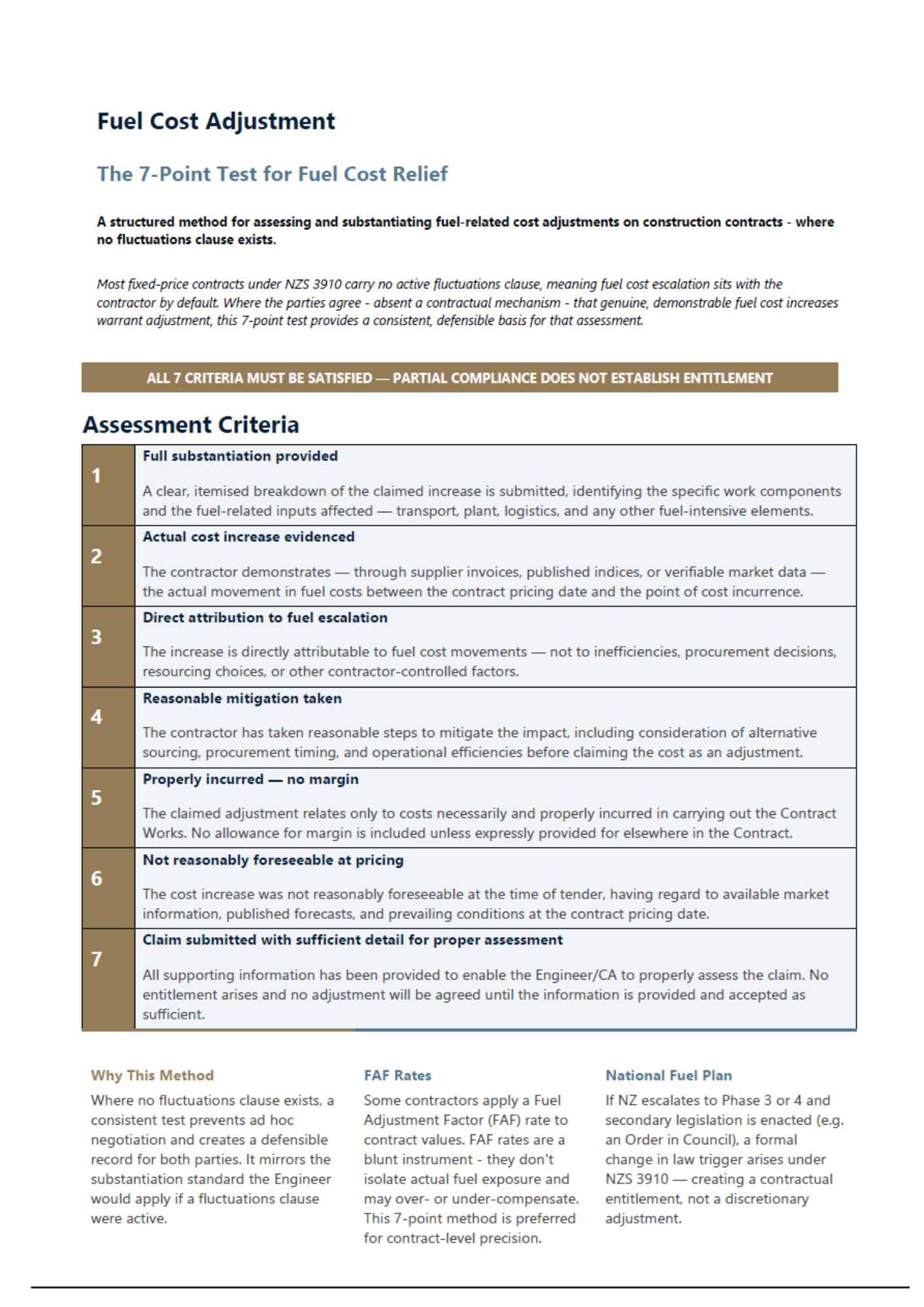
A structured, defensible method for assessing fuel-related cost adjustment claims on NZS 3910 fixed-price contracts — where no fluctuations clause exists. Most fixed-price construction contracts under NZS 3910 carry no active fluctuations clause. That means fuel cost escalation sits with the contractor by default — and stays there. But when fuel cost movements are genuine, material, and demonstrable, and both parties agree that adjustment warrants consideration outside the strict contractual framework, the critical question becomes: on what basis, and how?
BPM's 7-Point Test provides that basis. This free guide gives project managers, engineers, contract administrators, and principals a consistent, repeatable method for assessing whether a fuel cost adjustment claim has merit — one that mirrors the standard of substantiation an Engineer would apply if a fluctuations clause were active. It replaces ad hoc negotiation with a clear, auditable process that protects both parties.
What you'll learn:
How fuel cost risk is allocated under NZS 3910 fixed-price contracts — and what the default position means in practice
What the 7-point test requires, and why partial compliance is not enough
How to evidence actual cost movement against a defined pricing baseline
What reasonable mitigation looks like — and why it matters to a valid claim
Why FAF rates can over- or under-compensate, and what a more precise alternative looks like
How the National Fuel Plan's escalation phases could create a formal change in law entitlement under your contract
How to structure any agreed relief as a contract amendment to avoid future dispute
Get BPM's Fuel Cost Adjustment guide covering the 7-point test and full accompanying notes — and apply a consistent, defensible standard to fuel cost adjustment claims on your projects. This guide acts as a supplemental to our Fuel Disruption & Construction Projects: A Principal's Guide - Download it today, to cover all bases!
Enter your email to instantly access the PDF guide — save it digitally or print it out, dealer’s choice.